Products

How to Choose the Right NdFeB Magnet for BLDC Motors
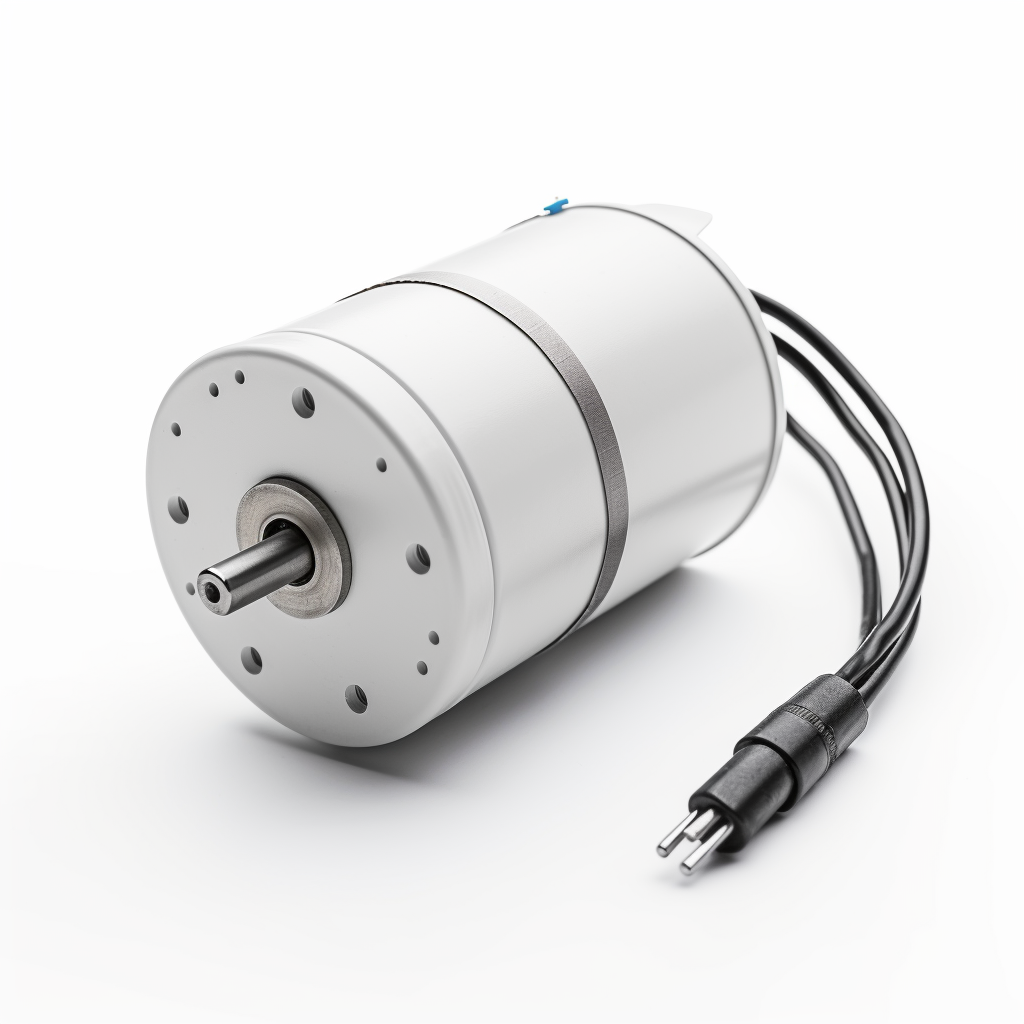
In the world of high-efficiency motion control, Brushless DC (BLDC) motors are the gold standard. However, a motor is only as capable as the permanent magnets within its rotor. Sintered Neodymium (NdFeB) magnets are the industry’s choice for achieving peak power density and compact design.
Choosing the right grade isn’t just about strength—it’s about balancing thermal stability, geometry, and cost.
Selection Matrix: At a Glance
| Factor | Impact on BLDC Performance | Key Metric |
| Magnet Grade | Determines total torque and power density. | (BH)max |
| Coercivity (Hcj) | Prevents demagnetization under heavy load. | Resistance to field |
| Magnet Shape | Optimizes flux distribution and rotor balance. | Arc vs. Block |
| Thermal Rating | Maintains magnetic field at high RPM/temp. | N, M, H, SH Suffix |
Core Parameters for Motor Engineers
To optimize a BLDC design, you must focus on 3 physical properties:
1. Remanence (Br) – The Torque Driver
Br represents the magnetic field strength.
- Higher Br = Higher Torque. * Typical Ranges: N35 (~1.17 T) | N42 (~1.30 T) | N52 (~1.48 T).
2. Coercivity (Hcj) – The Reliability Factor
Hcj measures a magnet’s resistance to being demagnetized by high current loads or reverse magnetic fields.
- Crucial for: Heavy-duty industrial pumps and power tools where sudden load spikes occur.
3. Maximum Energy Product (BH)max
This defines the “strength per volume”. Higher (BH)max allows for miniaturization, enabling smaller rotors to produce the same power as larger, lower-grade alternatives.
Common Grades by Applications
| Industry Sector | Specific Applications | Recommended Grades | Critical Requirements |
| 1. Consumer & Appliances | High-speed Hair Dryers | N45 / N48 | High Br for 100k+ RPM; optimized for thin-wall ring geometries. |
| Cordless Vacuums | N48M / N50M | Maximum suction power; M-series stability for transient high-current bursts. | |
| AC Compressors | 38H / 40H | 10-year service life; H-series ensures stability in sealed, high-pressure environments. | |
| 2. Industrial Equipment | Pumps & HVAC Systems | N42M / 40H | Balanced cost and torque for 24/7 continuous duty cycles. |
| Power Tools | N45M / 42H | High Hcj to resist demagnetization during frequent start-stops and heavy impact. | |
| Industrial Fans | N35M / N40M | Cost-effective N/M series for large-scale ventilation with low thermal stress. | |
| 3. Automotive Auxiliary | Electronic Water Pumps | 38SH / 40SH | Engine bay placement; SH-series (150°C) prevents thermal decay in cooling loops. |
| Body Motors (Seats/Windows) | N35H / N38H | H-series (120°C) ensures safety and operation in extreme summer cabin heat. | |
| EPS (Power Steering) | 45SH / 48UH | Mission-critical safety; requires ultra-high stability and high magnetic flux. | |
| 4. Robotics & Automation | Joint Servo Motors | N48H / N52H | Highest possible (BH)max for lightweight, compact robotic limbs with high torque density. |
| AGV / AMR Wheel Motors | N42H / N45H | Load-bearing stability; consistent flux to maintain smooth motion control under heavy weight. | |
| Precision Actuators | N45H / N50H | Compact size with H-series rating for rapid, high-accuracy positioning. |
Rotor Geometry & Magnet Shapes
The shape of the magnet dictates the “smoothness” of the motor’s torque (reducing cogging torque).
Arc (Segment) Magnets: The industry standard for rotors. They fit the circular curvature of the rotor perfectly, maximizing flux density and efficiency.
Ring Magnets: Ideal for high-speed, small-diameter motors (e.g., medical devices or cooling fans).
Block Magnets: Typically reserved for prototyping or low-cost, square-rotor structures.
Temperature: The Operational Threshold
Standard NdFeB magnets lose performance above 80°C. In BLDC motors, internal friction and high RPMs often push temperatures higher.
Standard (N): Up to 80°C | Best for ambient fans/sensors.
Enhanced (M): Up to 100°C | The standard for high-volume BLDC.
Industrial (H): Up to 120°C | Required for closed-environment pumps.
Strategic Selection Framework
Define the Torque Requirement: High Br (Remanence) translates directly to motor torque.
Audit the Thermal Environment: Match the suffix to your maximum operating temperature to prevent irreversible demagnetization.
Optimize for Volume: Leverage standard grades (N/M series) where possible to ensure supply chain agility and cost-effectiveness.