Products

Neodymium Magnet Grades Explained: N35 vs. N42 vs. N52
Neodymium Iron Boron (NdFeB) magnets are the powerhouse behind modern industrial efficiency. Whether you are designing high-torque BLDC motors, precision sensors, or automation equipment, choosing the right magnet grade is the most critical decision in your procurement process.
In this guide, we break down the technical differences between N35, N42, and N52 to help you balance performance, thermal stability, and cost-efficiency.
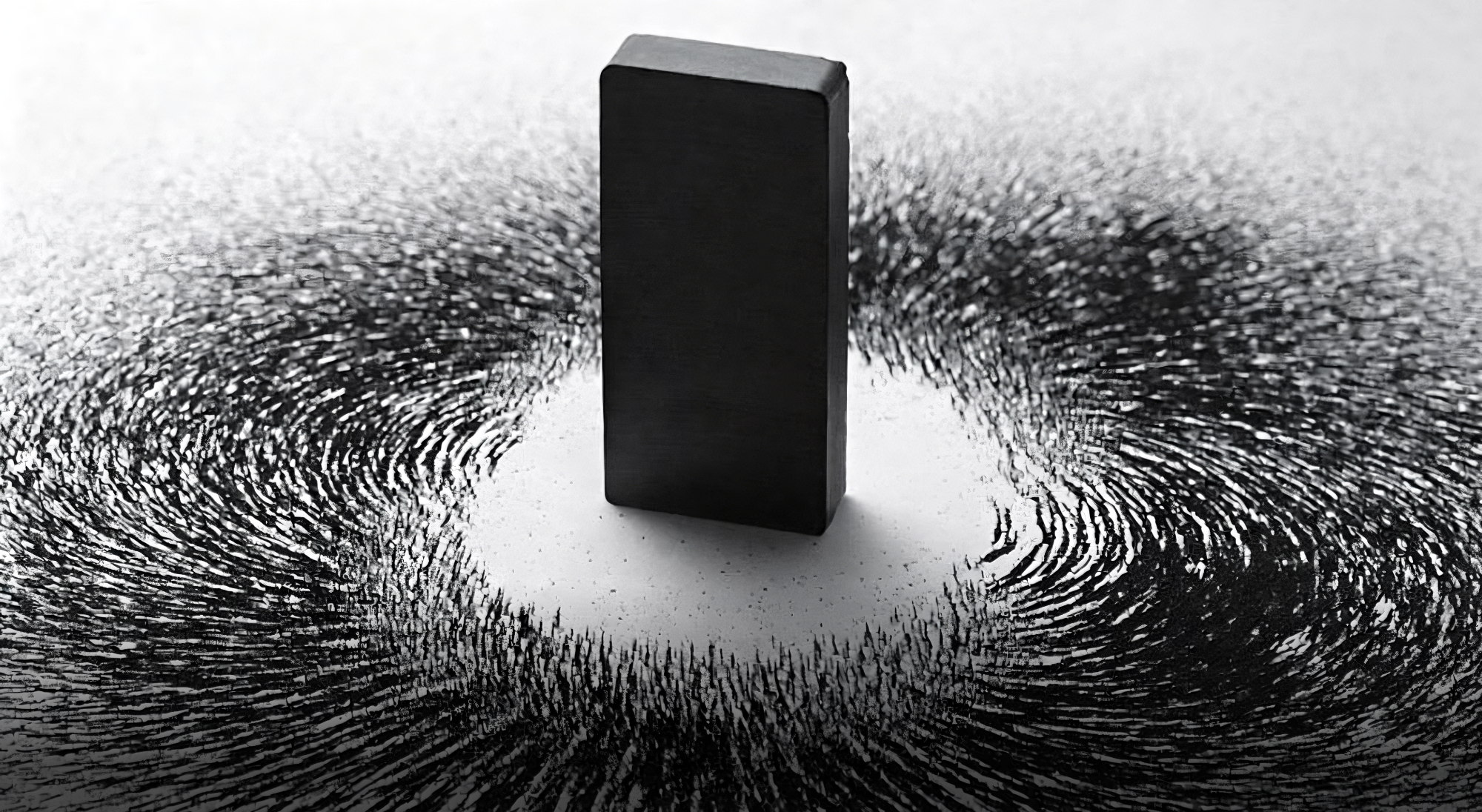
Understanding NdFeB Magnet Grades & BHmax
The grade of an NdFeB magnet refers to its Maximum Energy Product (BHmax). This value represents the magnetic energy density the material can store.
The Number (e.g., 35, 42, 52): Indicates the magnetic strength in MGOe (Mega-Gauss Oersteds).
The Goal: Higher grades allow engineers to achieve higher power density, enabling smaller, lighter, and more efficient motor designs.
N35 vs. N42 vs. N52: Technical Comparison Table
| Parameter | N35 | N42 | N52 |
| Magnetic Strength | Standard | High | Ultra-High |
| Remanence (Br) | ~1.17 T | ~1.30 T | ~1.48 T |
| Torque Potential | Moderate | High | Maximum |
| Cost Profile | Economical | Balanced | Premium |
| Primary Industry | Consumer/Sensors | Industrial/BLDC | Robotics/High-End |
The Three Pillars of Magnetic Performance
To select the correct grade, you must look beyond just the “N” number. Engineers focus on three primary metrics:
1. Remanence (Br) – The Power Source
Remanence is the magnetic flux density remaining in the magnet.
- High Br = Higher Motor Torque. If your application requires high output in a small footprint, look for higher Br values found in N48–N52 grades.
2. Coercivity (Hcj) – The Shield
Coercivity measures the resistance to demagnetization.
- High Hcj = Better Stability. This is vital for motors operating under heavy loads or in environments with strong reverse magnetic fields.
3. Maximum Energy Product – (BH)max
- This defines the total strength. A higher (BH)max allows for miniaturization – getting more power out of a smaller magnet.
Choosing the Right Grade for Your Application
N35: The Economical Workhorse
Best for: Consumer electronics, sensors, and small DC motors.
Why choose it? It offers the lowest material cost and is easier to machine. If extreme strength isn’t required, N35 provides sufficient performance for high-volume, cost-sensitive projects.
N42: The Industrial Standard
Best for: Industrial BLDC motors, servo motors, and automation.
Why choose it? N42 is the “sweet spot” for industrial applications. It offers a superior performance-to-cost ratio and reliable thermal stability for continuous operation.
N52: The High-Performance Peak
Best for: Robotics, aerospace, and ultra-compact drives.
Why choose it? When space is the primary constraint and you need maximum torque density.
Note: N52 often has lower intrinsic coercivity than lower grades; careful thermal management is required.
Thermal Stability: Suffix Matters
Temperature is the “Achilles’ heel” of Neodymium magnets. Standard grades are rated for 80°C. For higher operating temperatures, look for these suffixes:
N Series: Up to 80°C (Standard)
M Series: Up to 100°C (Industrial)
H Series: Up to 120°C (High Temp)
SH Series: Up to 150°C (Automotive/Severe)
Conclusion: Performance vs. Reliability
Higher magnet grades do not always mean better performance. The best design balances Magnetic Strength (Br), Thermal Stability (Hcj), and Total Cost.
N35 for entry-level/sensors.
N42 for mainstream industrial motors.
N48-N52 for high-end robotics and compact power.